
Image via discovered:koreaherald.com
Last updated
Samsung Electronics: Product Launch
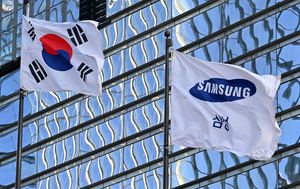
Samsung Electronics reports record Q2 operating profit of 89.5 trillion won ($61.9B), driven by AI-driven memory demand. Device Solutions division (semiconductors) extends record-breaking performance with strong HBM demand.
Source: discovered:koreaherald.com
The leadership read
The record profit is less interesting than what produced it: Samsung's Device Solutions division has now posted back-to-back record quarters on the strength of HBM demand specifically, not broad semiconductor volume. That distinction matters operationally. HBM is an architecturally different product from commodity DRAM, it requires co-engineering with hyperscaler and AI accelerator customers, tighter yield management, and supply commitments that run years ahead of delivery. Two consecutive record quarters on that basis means Samsung has moved HBM from a growth bet into a core revenue dependency, with all the customer-concentration and roadmap-execution pressure that entails. The related signals provided here are thin for direct semiconductor comparables, the 12 signals span fintech, defense, EVs, and quantum hardware, with no direct HBM or advanced memory peers. Taking the broader view: AI-infrastructure capex from hyperscalers has been consistently signaled across multiple quarters, and Ichor Holdings' return to profitability with positive forward guidance in semiconductor equipment is the closest adjacent data point, suggesting the supply chain beneath advanced packaging and memory production is also tightening. That equipment-level recovery is consistent with sustained, not cyclical, HBM demand. Across companies operating at this stage of AI-infrastructure scaling, the pattern concentrates functional pressure in three areas: advanced packaging and process engineering leadership, long-cycle key-account commercial management with hyperscaler procurement teams, and supply-chain risk operations capable of managing yield-sensitive, multi-year forward commitments at scale.
Market context: Backdrop: a 102.5 (Warm) Talent Market Index (down 1.7 on the month) with Asia activity steady (-0.7pts).
Samsung Electronics: 12 signals in the last 90 days — above the Technology median of 1 across 217 tracked companies; 0.6% of MitchelLake's Asia signal flow; 12 tracked across 65 days.
MitchelLake in this thematic
From the MitchelLake archive
Also at Samsung Electronics →
More signals across Technology
Product Launch · Asia
Tencent →Tencent WorkBuddy reached 20.97M monthly active users in June 2026, surpassing Alibaba's entire AI product portfolio combined. Pony Ma personally praised WorkBuddy in Q1 earnings as China's most widely used efficiency AI agent service. Strategic significance: WorkBuddy leverages WeChat ecosystem integration (QR code login, mini-program, zero-config setup) to drive adoption among non-technical workers.
Product Launch · Asia
Motorola →Motorola is launching the Moto Pad 70 tablet in India on August 8, 2026, featuring a 12.1-inch display, MediaTek Dimensity 6400 processor, 10,200mAh battery, quad speakers, Moto Pen support, and 2 years of OS updates.
Product Launch · Asia
Huawei Technologies →Huawei will debut its Atlas 950 SuperPoD next-generation computing cluster at the World Artificial Intelligence Conference (WAIC) in Shanghai, July 17-20, 2026. This is the first physical display of the system.
Product Launch · Asia
SevenRooms →SevenRooms is being highlighted as a data-driven guest experience platform gaining traction in APAC hospitality sector, indicating expansion into region
Product Launch · Asia
BlueFocus →BlueFocus reported AI-driven revenue of USD 546.05 million with token usage surpassing one trillion, indicating significant AI product success and scale
Geographic Expansion · Asia
CoreWeave →CoreWeave is entering Indonesia with 3 new data centers adding 360 megawatts of contracted power capacity
Intelligence powered by Autonodal ↗